Communication
Communication is a process that is an essential part of directing process that means the exchange of ideas, thoughts, views, facts, knowledge, figures, etc. This transfer of information of any kind and getting a response for the same is known as the process of communication. Communication is different from mere talking and listening. It includes both. When a person is speaking and listening to the person he is speaking to then it becomes effective communication. One major aspect of communication is ‘understanding’. A person who is speaking should do so in an effective manner so that the person who is listening should be able to comprehend it.
Elements of Communication Class 12
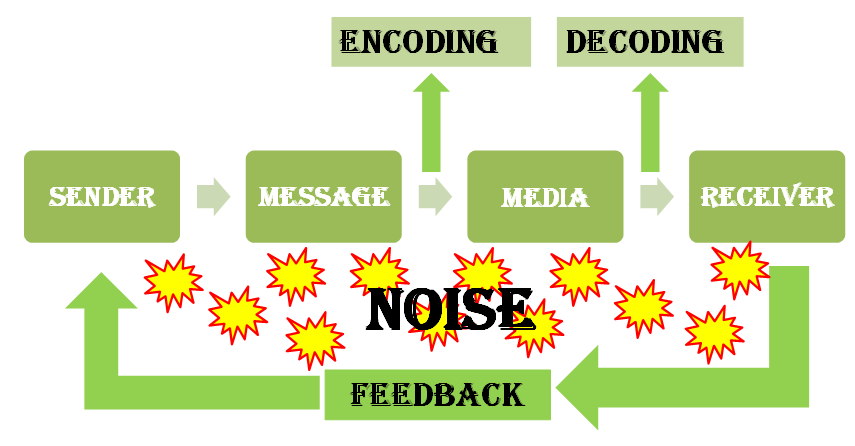
There are various elements of effective communication as understood by the various definitions given by management experts. These are as under:
Sender
It means the person who wants to convey his ideas and thoughts to another person. The sender is the ‘source’ of the communication.
Message
It is the idea, though, fact, figure, feeling, suggestions, knowledge, etc which the sender wants to communicate.
Encoding
That message will be converted into an understandable symbol i.e. a written format, oral means, pictures, gestures, etc.
Media
Media or medium is the channel through which the encoded message of the sender will be sent to the receiver. The medium can be face-to-face, online platform, paper, phone call, etc.
Decoding
While decoding the message sent by the sender will be converted back into the format in which the receiver finds comfortable.
Receiver
The receiver finally understands the message by decoding it.
Feedback
The communication process does not end by receiving the message. The feedback is also to be given back to the sender indicating that the receiver has understood the message. Here, the receiver of the message becomes the sender and the process continues.
Noise
Noise means the hindrance between the communication processes. The noise can be on the part of the sender, message, or receiver such as faulty encoding, poor expressions or gestures, poor internet connection, poor telephone network, lack of attention, decoding the wrong message, semantic barriers, prejudices, etc.
Importance of Communication
Acts as a basis of coordination
Proper communication of goals and the way they can be achieved should be done so that there is no misunderstanding about the job which employees have to do. This clear distinction of work will bring coordination among various departments, divisions, and employees.
Helps in the smooth working of an enterprise
In an organization, there are many tasks to be performed. One employee may be working on the marketing of the product and the other may be manufacturing the product while one may be designing the future changes in the product. But even after such distinction, there is a link between these activities. The production of the product will take place according to the need in the market and designing will be done according to the feedback given by people which is taken care of by the marketing department. Thus there should be proper communication between different areas of the organization so that the organization runs smoothly.
Acts as the basis of decision making
Without proper communication, the manager who wants to make decisions regarding certain aspects may not get the right information and may not get information at all. Thus communication is a must for an organization so that the decisions taken by the management are correct, quick, and in sync.
Increases managerial efficiency
Communication is the key to quick, effective, and correct administration. It enhances managerial efficiency as the right kind of communication will help in conveying the goals, ideas, instructions, and responsibilities. Efficient communication will help subordinates to know what exactly the superior wants and then they will be working in the right direction. When the communicated idea or thought is misinterpreted then it may lead to nonachievement of target and even losses.
Promotes industrial peace
When the relationships in an organization are handled with trust then the organization is at peace. This trust comes when there is mutual understanding and harmony among people. This harmony is possessed when there is effective communication of wants, needs, thoughts, ideas, expectations, beliefs, etc.
Establishes effective leadership
Leadership cannot be performed without communication. A leader cannot remain silent because he needs to motivate and influence his followers. A quality of a good leader includes good communication skills. This will help him properly guide the subordinates for achieving their targets and organizational goals.
Boosts morale and provides motivation
Good communication with the employees of an organization helps in boosting the morale of the employees. Whenever employees are in need or want to talk about something then they can directly communicate with the person concerned without hesitation and this will build good interpersonal relationships in an organization which will reduce the absenteeism and employee turnover of an organization.
Improving the effectiveness of communication
There is always scope for improvement and there are certain aspects on which a manager can work so that communication improves. They are as under:
Clarify the ideas before communication
The idea thought problem, solution, query, feedback, etc. which we need to communicate should be first clear in our mind. When we do not have a clear picture of what we want to communicate then we may communicate in such a manner that is not clear to the receiver or it may get misunderstood.
Communicate according to the needs of the receiver
Communication will be effective and will yield some benefits only when the thoughts or the message which is communicated is according to the knowledge and understanding of the receiver. For example: if a science background student starts talking about formulas and theories, with his commerce background student, which he has studied in his class lecture today then it will become difficult for the receiver to understand and the conversation will not hold sense.
Consult others before communicating
Consulting others before communicating will help in making clear ideas and statements in a format that can be communicated effectively. Participation of subordinates will help in cooperation and give them a sense of acceptance and recognition also.
Be aware of the languages, tones, and content of the message
Effective communication will have the use of proper language and tones which do not hurt the receiver or any person around. The content should be rationally chosen so that it does not offend the sentiments of the receiver.
Convey things of help and value to the listener
The message should be according to the needs of the listener. Communication in an organization should always be productive and should add some value to the receiver.
Ensure proper feedback and follow up
Effective communication can become more responsive only when there is the feedback of the message conveyed i.e. whether the idea communicated is understood by the receiver or not. Proper feedback and follow-up is very important because it helps in removing hurdles and hindrances in communication, if any, and also help in improving communication in the future.
Communicate for the present as well as future
Usually, we have noticed that the communication in an organization is for the present situation, for ongoing projects, for exiting commitments, etc. While effective communication also adds up the things related to the future.
Be a good listener
People often confuse talking with communication. While talking and speaking are only one-sided, communication is two-way. Communication will be effective when the listener is attentive and also expressive and gives feedback in return.